

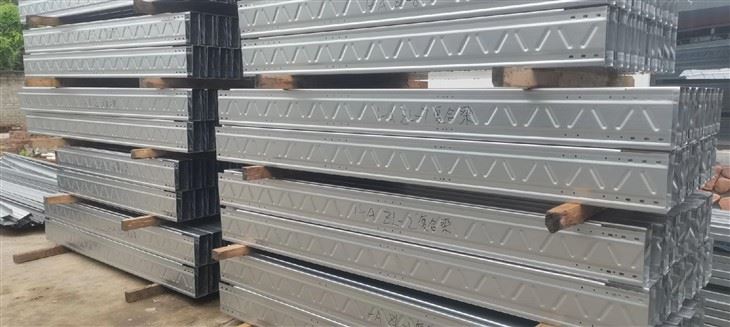
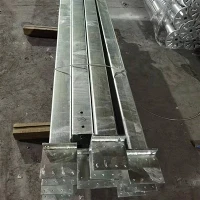
Steel Beams Fabricated
In simple words, steel beams fabricated is the cutting, bending, and shaping of structural steel. Steel is carefully fabricated to form various structures for a wide variety of purposes.
Xiamen Jinghe Natural New Materials Co., Ltd has focused on top-quality hardware products like stainless steel products, metal products, galvanized products, customized by sample or drawing, etc. all over 20 years in China. We started as a small operation, but now have become one of the leading suppliers in the metal products industry in China.Today, we have varied products such as ground screws, brackets, Solar Carport products, bridges, C channel steels, manufacturing metal products, and also for buyers customized any metal products.
Why Choose Us
Wide Product Range
Today, we have varied products such as ground screws, brackets, Solar Carport products, bridges, C channel steels, manufacturing metal products, and also for buyers customized any metal products.
Quality Assurance
The quality of our products is undoubtedly guaranteed. They meet the highest quality requirements as stipulated in ISO9001, ISO14000:14001 SGS guidelines, and our stringent quality control system.
Wide Range of Applications
Our products are applicable to many situations, for example, solar energy foundations, wooden chalets, integrated houses, container houses, tent hotels, light steel structures, wooden walkways, water trestles, Pillar foundations, handrails/fences, tower foundations, recreational facilities, etc.
Broad Market
We have customers from both the domestic market and the overseas market. Our main sales market is North America as well as Southern Europe, which respectively take up 25.00% and 15.00%.

Items: Ground foundation screws
Material: Q235 steel
Length: 500mm-2000mm or customized
Surface: Hot dip galvanized
Packing :①For small parts: Plastic bag, box, wooden pallet, crate
Packing :②For Big Parts: Steel pallet, wooden pallet, crate
Lead Time: 3-10 working days

Ground screws, also known as helical piles or screw piles, are innovative foundation systems that provide a secure and stable base for various structures. They consist of a steel shaft with helical plates attached to them. These plates allow the ground screws to be easily rotated into the ground using machinery.

Items: Ground screw anchor footings
Material: Q235 steel
Length: 500mm-2000mm or customized
Surface: Hot dip galvanized
Packing :①For small parts: Plastic bag, box, wooden pallet, crate
Packing :②For Big Parts: Steel pallet, wooden pallet, crate

Items: Ground foundation screws
Material: Q235 steel
Length: 500mm-2000mm or customized
Surface: Hot dip galvanized
Packing :①For small parts: Plastic bag, box, wooden pallet, crate
Packing :②For Big Parts: Steel pallet, wooden pallet, crate

Ground Screw Foundation for House
Items: Ground screw foundation for house
Material: Q235 steel
Length: 500mm-2000mm or customized
Surface: Hot dip galvanized
Packing :①For small parts: Plastic bag, box, wooden pallet, crate
Packing :②For Big Parts: Steel pallet, wooden pallet, crate

Items: Steel screw piles price
Material: Q235 steel
Length: 500mm-2000mm or customized
Surface: Hot dip galvanized
Packing :①For small parts: Plastic bag, box, wooden pallet, crate
Packing :②For Big Parts: Steel pallet, wooden pallet, crate

Items: Solar Bracket Hook
Material: Stainless Steel: SS201, SS304, SS316; Carbon Steel: Gr A2; Aluminum
Finishing: Plain, Sand Blasting
Sizes: Production according to customer drawings
Production Process: Cold Forging, Machining and CNC, Stamping, Welding

Items: Metal Angle Supports
Material: Steel, stainless steel, aluminum and so on
Sizes: Production according to customer drawings
Structure: 90 degree L shaped
Thickness: 2-4mm
Color: Original color or as customized
Lead Time: 10-20 working days
Payment:TT 100% or 30% deposit, the balance before shipment

Items: Solar panel mounting stand
Material: Steel, stainless steel, aluminum and so on
Sizes: Production according to customer drawings
Wind Load: 60m/s
Snow Load: 1.4kN/㎡, 1.4KN/m2
Installation Site: Open Field/Ground
Color: Original color or as customized
What is Steel Beams Fabricated
In simple words, steel beams fabricated is the cutting, bending, and shaping of structural steel. Steel is carefully fabricated to form various structures for a wide variety of purposes. Metal fabricators should be able to read and interpret engineering diagrams and blueprints, utilize modern techniques and utilize mechanical engineering fabrication software and equipment. The most crucial aspects of steel fabrication are the tools and equipment. Without the latest and greatest technologies, structural steel fabrication can be a sluggish as well as a complicated process. To create steel beams, high-quality structural steel is required along with the right tools, techniques, expertise, and experience.
Highly-durable materials
Steel Beams Fabricated is an incredibly resilient material. It's comparatively lighter than concrete and wood while being resistant to corrosion and sustainable. Well-designed steel frame buildings have a very long lifespan in general, and that's due mainly to the intricacies of fabrication work.
Cost-effectiveness
Steel Beams Fabricated costs are of significantly better value than other metals, where steel framing is typically preferred over reinforced concrete. Once fabricated, the Steel Beams Fabricated components are more straightforward to install (compared to other materials). The extra effort during installation saves considerable time and money in the long run.
Flexibility
Steel is renowned for its malleability, with its properties enabling it to be easily fabricated into unique, diverse shapes, sizes and positions. For example, steel beams can be welded or bolted together. This is one of the many reasons why engineers like Steel Beams Fabricated frame buildings because last-minute alterations are easy to request and put in place.
Recyclability
Everyone is rightfully concerned about their impact on the environment, and many companies are making strides in reducing their carbon footprint. Steel Beams Fabricated is an easily recyclable material, ergo, an environmentally-friendly option for fabrication companies.
Safety
Steel Beams Fabricated can withstand the harshest weather conditions, from strong winds and storms to extremely high temperatures. If appropriately built, steel frame buildings are some of the safest structures around. Most of these steel structures are built off-site, reducing the risk of on-site accidents during construction.
Types of Steel Beams Fabricated
I-Beams (Universal Beams)
As the name implies, these types of structural steel beams have an "I" design that allows them to distribute loads evenly along their length, improving their efficiency for carrying loads longer. It makes them popular for structural integrity applications like bridges and building frames.They have a web and two flanges connecting them, and the web takes a vertical shape while the two flanges are horizontally positioned. The web is the main load-bearing component, while the flanges provide additional support. The market has no specific size and dimension of I-beams; you can get them in various widths and depths depending on your needs.
H-Beams
H-beams are made of hot-rolled structural steel-a material popular for exhibiting remarkable strength and durability. These beams also have a web carrying the load, while their legs (flanges) serve the purpose of strength contribution.One of the main benefits of steel beams is their ability to resist bending and other forces, and the shape of H-beams enables them to beat these conditions better than I-beams. Aside from their high tensile strength, they are also corrosion-resistant, particularly important for harsh environments.
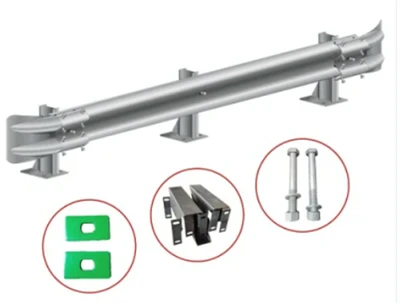
W-Beams (Wide Flange Beams)
All steel beams are carryable and hold substantial loads. However, some do better than others and wide flange beams are one of the pack leaders. They can distribute massive loads evenly, even better than I and H-beam steel while allowing constructors to carry them easily due to their shape and design.On the other hand, their web provides additional structural stability allowing them to resist bending and torsion forces. They can also be utilized as vertical columns, representing pillars for tall structures.
Channel Beams (C-Beams or U-Channels)
Channel beams have a design resembling the letter "C." They are also known as C-beams or U-channels and have vast applications because of their unique shape consisting of a flat horizontal section, the web, and two vertical sections-flanges, all supporting high buildings and structures.In addition, C-beams are highly versatile, having vertical or horizontal installation options, depending on your project needs. This versatility supports building frames, machinery, and vehicle chassis.
Application of Steel Beams Fabricated
Construction
When a new building is being planned, you can count on steel beams fabricated being a key material for the project. Blueprints will often call for steel beams, plates, and girders of varying size.
Bridge-building
Though the final structure is different from a building, new bridges are designed by professional architects and require blueprints that will almost always include steel beams fabricated components.
Shipbuilding
Steel beams fabricated inherent strength and flexibility make it an ideal component of framing systems for ships. Ships are typically built in sections (a process called block construction), and each section can require beams, plates, and other perfectly fabricated steel components.
Mining
The mining industry utilizes a wide range of equipment, which can include massive excavators as well as on-site processing facilities, all of which require myriad steel beams fabricated materials. Examples include conveyors, staircases, and flooring.
Energy
Steel beams fabricated is used in almost every component of an oil rig, from pipelines and derrick legs to platforms, stairs, and riser handling systems. Additionally, as the search for reliable energy grows, so too does the construction of wind towers and turbines, which are almost always made of steel beams fabricated.
A992/A572-50
This type of steel is the most often used in construction. It is a high strength steel alloy composed of columbium and vanadium. It is very light, corrosion-resistant, and conducive to welding. Its tensile strength is 65 kilo-pounds per square inch.
A588
This type of steel is made using a copper alloy. It is one of the most corrosion-resistant types of steel beams. It is so corrosion resistant that it does not require painting.It is the best choice when you are looking for a light-weight form of steel that is resistant to corrosion. It has a tensile strength of 70 kpsi, making it stronger than A992/A572-50 steel.
A36
This form of steel is one of the best choices for weldable steel that can also be altered by machinery. This is a less expensive mid-range steel. It stretches well under the application of tensile strength. Its minimum tensile strength is 58 kpsi.
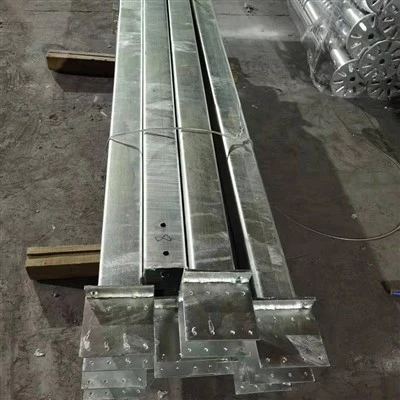
How to Choose Steel Beams Fabricated
Span Length
The span length refers to the distance between the supports or columns where the steel beam will be installed. Longer spans require beams with higher load-bearing capabilities and greater stiffness to prevent sagging or deflection. Consider the specific requirements of your project and consult structural engineering guidelines to determine the appropriate beam size and type for the given span length.
Beam Shape and Size
Another important factor to consider when choosing a steel beam for your project is the shape and size since they are flexible and manufacturers produce them into I-beams, U-channels, H-beams, and W-beams, etc.
Material Grade
Steel beams are available in different material grades and it influences the beam's strength, ductility, and corrosion resistance. Consider the environmental conditions and potential exposure to factors like moisture, chemicals, or extreme temperatures when selecting the material grade for your project.
Construction
The construction method you decide on can affect the choice of the steel beam. For example, if you opt for bolted connections, you may need to consider beams with specific features, such as pre-drilled holes or flanges designed for bolting. On the flip side, if you plan to use welded connections, the beam must be compatible with welding techniques.
Steel Beams Fabricated Processes & Techniques
Cutting
Fabricators use various different types of machinery to cut steel sections, channels or plates to specific sizes and dimensions. Typically speaking, the most common method of cutting is shearing, although band saws can be used, as can torches or laser cutting equipment.
Folding
This process is where the metal is folded into shape at a particular angle. Folding steel can only be done in steel fabrication facilities with the right equipment, as this is a highly complex process.
Welding
Steel welding is the process of bending and joining multiple structural steel sections together, forming a single unit. There are various types of welding, including TIG, MIG or tungsten arc welding.
Shot blasting
Shot blasting steel is done to remove any impurities from steel channels, sections or angles, to prepare them for other fabrication processes.
Bending
Steel frame buildings and other custom-made structures require intricate and detailed steel components. A skilled steel fabrication company will utilise bending and rolling techniques to create curves in shapes.
Forming
The process of forming is where flat sheet metal is formed into three-dimensional shapes. This is done by applying force to change its shape, but without adding or removing any material. Machine-based forming can be done alongside steel welding to produce larger, longer sheets of steel.
How to Maintain Steel Beams Fabricated
Regular inspections: The first line of defense
The key to longevity in any steel beams fabricated lies in vigilant oversight. Regular inspections help identify potential issues like cracks, rust, or wear before they escalate. Seasonal checks are advisable, especially after extreme weather conditions that might compromise the steel's integrity.
Corrosion management: Keeping rust at bay
Corrosion is steel's arch-nemesis, but with the right practices, its effects can be significantly mitigated. Protective coatings, such as galvanizing or painting, act as shields, preventing corrosive elements from wreaking havoc. It's crucial to select the appropriate type of coating based on the environmental conditions the structure will face.
Load management: Balancing the burden
Overloading a steel beams fabricated can compromise its integrity. It's essential to adhere to the designed load specifications and regularly assess the load distribution. Modifications to the structure or its use should always be reviewed by a structural engineer to ensure they don't negatively impact the steel's capacity.
Protective measures: Guarding against environmental stress
Environmental factors such as moisture, salt, and pollutants can accelerate the deterioration of steel beams fabricated. Implementing measures like proper drainage systems to prevent water accumulation and using barriers or shields in particularly vulnerable areas can extend the life of a structure.
Expert fabrication: The foundation of durability
The quality of steel fabrication directly impacts the longevity of a structure. Partnering with experts like tratfab, who prioritize precision, quality materials, and cutting-edge techniques, ensures that your steel beams fabricated are built to last.
Our Factory


FAQ
Hot Tags: steel beams fabricated, China steel beams fabricated manufacturers, suppliers, factory, Sheet Metal Bracket, Manufacturing Metal Products, Stamped Metal Brackets, T Frame Carbon Steel Solar Mounting Carport, Pv Support Bracket, Stamping Sheet Metal Parts




Send Inquiry
