Call Us: +8613559247627Email: 610719697@qq.com
enLanguage

Cable Tray

Your Professional Cable Tray Supplier


Xiamen Jinghe Natural New Materials Co., Ltd has focused on top-quality hardware products like stainless steel products, metal products, galvanized products, customized by sample or drawing, etc. all over 20 years in China. We started as a small operation, but now have become one of the leading suppliers in the metal products industry in China.Today, we have varied products such as ground screws, brackets, Solar Carport products, bridges, C channel steels, manufacturing metal products, and also for buyers customized any metal products.


Why Choose Us

Our Certificate

They meet the highest quality requirements as stipulated in ISO9001, ISO14000:14001 SGS guidelines, and our stringent quality control system.

Production Market

We have customers from both the domestic market and the oversea market. Our main sales market: North America 25.00%.Southern Europe 15.00%.

Product Application

Our products are applicable to many situations, for example, solar energy foundations, wooden chalets, integrated houses, container houses, tent hotels, light steel structures, wooden walkways, water trestles, Pillar foundations, handrails/fences, tower foundations, recreational facilities, etc.

Custom Service

We can produce corresponding products according to the material parameters, drawings and samples provided by users.


First 12 Last 1/2

Advantages of Cable Tray

Improved Air Circulation and Heat Dissipation

One of the key advantages of cable trays is their ability to improve air circulation around cables. Unlike traditional methods that involve cable bundling, cable trays promote better airflow, which helps dissipate heat effectively.

Enhanced Flexibility and Adaptability

Cable trays provide a high level with cable trays, it's easier to accommodate different cable types and sizes within a single system. The modular design allows for easy modifications and expansions, making it ideal for evolving infrastructure needs.

Efficient Cable Routing and Organization

Cable trays offer superior cable routing and organization capabilities. They provide a dedicated pathway for cables, reducing the likelihood of tangles, snags, and damage. With properly installed cable trays, it becomes easier to identify and access specific cables, simplifying maintenance and troubleshooting procedures.

Enhanced Safety and Reduced Fire Hazards

Cable trays offer enhanced safety features. Cable trays are designed to prevent the spread of fire, as they are often made from fire-resistant materials. Additionally, cable trays minimize the risk of electrical faults, short circuits, and damage caused by cable overload, improving overall safety in the facility.


Types Of Cable Tray


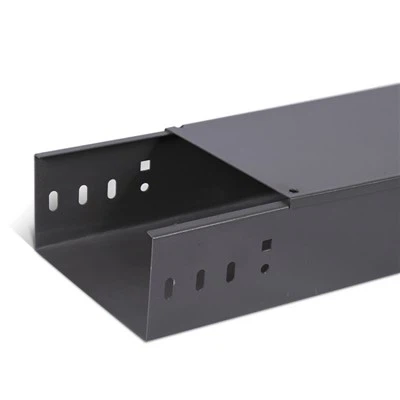
Galvanised Steel Cable Tray
Galvanised steel cable trays are metal frameworks designed for supporting and protecting cables, featuring zinc-coated steel.


Perforated Metal Cable Tray
Perforated Metal Cable Tray is a widely used product in construction and electrical industries worldwide. Designed to support and secure cable systems, it is made from high-quality metals that undergo a series of perforation processes to create a robust and durable structure.


Stainless Steel Cable Tray
Stainless Steel Cable Tray is a highly durable and corrosion-resistant solution for managing and protecting electrical cables and wiring systems.

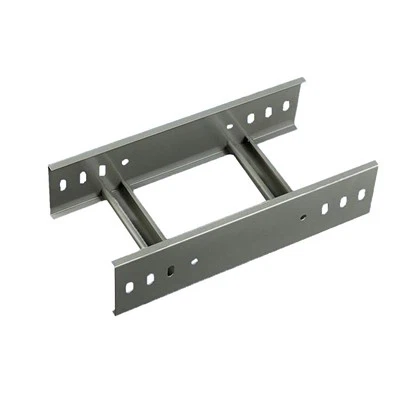
Ladder Cable Trays

Ladder cable trays are an essential component of any modern electrical or telecommunications installation. They are crucial for managing and protecting a network of cables while ensuring optimum performance and reliability.

Wire Mesh Cable Tray

Wire mesh cable tray is a type of cable management system that is designed to provide support and protection for cables and wires. It is made up of wire mesh panels that are joined together to form a tray-like structure.

X-Tray Cable Tray

X-tray cable tray is widely used in industrial manufacturing facilities for the safe and reliable transport of power and data cables.


Galvanised Steel Cable Tray


How to Test a Cable Tray

Confirmation of materials w.r.t specifications and issued for Construction drawings.
Visual inspection of tray dimensions such as width, rung space, height, run length & tray coating.
Ensure for braces and supports are adequate to handle tray weight as specified by drawings.
Check installed supports and braces to ensure that it is aligned vertically.
Check installation of connector or expansion joints is proper.
Check the installation of the cable tray if it does not discord or clash with equipment.
Check all braces and supports that are appropriate for weight handling of the tray & cables.
Ensure the correct and secure installation of nuts and bolts in which supports are screwed to structural steel.
Hold-down clamps shall be installed properly and anchored in the required locations.
Verify that there are no sharp edges & burr that may cut or damage the cables.
All metallic cable trays should be joined every 25 meters in length.
Coupler plates or bonding jumpers are used at every section of the tray joint for proper electrical.
Check Earth bonding jumpers for proper connection and joined to the main grounding grid.


Materials Used To Make Cable Tray


Metallic Cable Trays

Made of aluminum, steel, or stainless steel, these trays are known for their corrosion resistance, strength-to-weight ratio, and suitability for various environments.

Non-Metallic Cable Trays

Typically made of fiberglass, these trays are non-conductive, corrosion-resistant, and lightweight. Proper bend radius maintenance is crucial for coaxial or fiber-optic cables.

Perforated Metal Cable Tray


Application of Cable Tray


1

Commercial Buildings

In settings like offices and hospitals, these trays are often installed overhead to keep all wiring out of sight.

2

Industrial Settings

Wires need to be kept well-organized and protected in these settings. As the conditions here are harsher, the trays you choose must be sturdy against heavyweights, chemical conditions, and mechanical stress.

3

Data Centers

Cable trays are essential in data centers, providing a safe and efficient way to route cables. They are often installed under raised floors or overhead.

4

Healthcare Facilities

Cable trays are used in healthcare facilities to route electrical cables and wires throughout the building. They are vital in critical care areas, where a reliable power supply is crucial.


FAQ


Q: What is a cable tray used for?

A: Cable trays are mechanical support systems that provide a rigid structural system for electrical cables, raceways, and insulated conductors used for electric power distribution, control, signal instrumentation, and communication. Metal cable trays are made of galvanized steel, stainless steel, and aluminum.

Q: When should a cable tray be used?

A: Solid bottom cable trays are ideal for applications that require additional protection for cables: Industrial Environments: Used in manufacturing facilities, power plants, and other areas where cables are exposed to potential physical damage or harsh conditions.

Q: What is the minimum distance between cable trays?

A: Cable Tray Spacing When determining cable tray spacing, factors to consider include the tray's load capacity, the weight of the cables, and the environment in which the tray will be installed. The recommends a minimum clearance of 6 inches between trays, and a maximum fill capacity of 50%.

Q: What is the standard length of cable tray?

A: Perforated Cable Tray is available in a standard width of 50mm, 75mm, 100mm, 300mm, 450mm and 600mm and the standard length of 2500mm/3mts.

Q: What is the international standard for cable tray?

A: IEC 61537:2023 specifies requirements and tests for cable tray systems and cable ladder systems intended for the support and accommodation of cables and possibly other electrical equipment in electrical and/or communication systems installations.

Q: How is cable tray calculated?

A: When using solid bottom cable tray, the sum of the cable diameters is not to exceed 90% of the available cable tray width. The sum of the diameters (Sd) of all cables = 2.26 + 3.52 + 6.20 = 11.98 inches; therefore a cable tray with an available width of at least 12 inches is required.

We're well-known as one of the leading cable tray manufacturers and suppliers in China. We warmly welcome you to buy bulk high quality cable tray at competitive price from our factory. For customized service, contact us now.

Cable Tray and Accessories, Wire Cable Tray, Cable Tray

(0/10)

clearall