


Seismic Support for Cable Tray
Items: seismic support for cable tray
Material: Steel, Stainless Steel, Aluminum
Tolerance: +/-2%
Size: Customized
Color: Silver,black or customization.
Accessories: Connector with Bolt and Nut
Surface Finish: Galvanized, Powder Coated, Paint, SS304, SS316
Thickness: 0.8mm-3mm
Application: Engineering&Construction/ Underground Park/ Public Facilities
Feature: Fast Heat Dissipation
Lead Time: 10-20 working days
Payment: TT 100% or 30% deposit, the balance before shipment
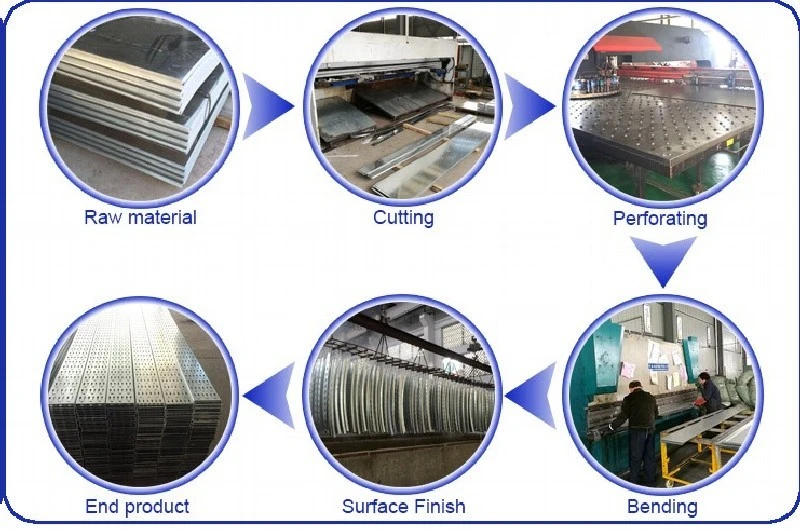
production process
What is Seismic Support For Cable Tray?
Seismic Support For Cable Tray is a support system specifically designed to enhance the seismic performance of cable trays. Through expert mechanical calculations and structural design, it ensures that cable trays withstand horizontal and vertical vibrations during earthquakes, minimizing displacement and deformation caused by shaking. This support system is suitable for various construction environments, offering effective solutions for both new projects and retrofitting existing structures. Manufactured from high-quality materials and subjected to rigorous quality control tests, it guarantees excellent durability and corrosion resistance. Even in harsh environmental conditions, it maintains long-term stability and reliability.
The production process of seismic support for cable tray involves several steps.
①The first step is sourcing the raw materials like steel, aluminum, or galvanized iron sheets then cut to the required size using machines like lasers or shears.
②Next, the cut sheets are formed into the required shapes and sizes using a variety of techniques like bending, rolling, and welding.
③After forming the seismic support, it undergoes surface treatment like galvanizing or powder coating to prevent corrosion.
④Once the seismic support is coated and cured, it undergoes quality control checks to ensure it meets the required specifications. The support is checked for any defects and subjected to stress tests to ensure it can withstand seismic activity.
⑤Finally, the completed seismic support is packaged and shipped to the customer. The packaging process involves wrapping the support in protective materials and then placing it in crates or pallets for transport.
Benefits of Seismic Support for Cable Tray
Enhanced Structural Stability
Our seismic supports are designed to boost the overall stability of cable trays. Through expert mechanical calculations, they ensure cable trays withstand horizontal and vertical vibrations during earthquakes, minimizing displacement and deformation due to shaking.
Protection of Critical Infrastructure
In emergencies like earthquakes or strong vibrations, unsecured cable trays may shift or collapse, causing power outages and hindering rescue and recovery efforts. Our seismic supports firmly secure cable trays, safeguarding critical infrastructure from damage.
Easy Installation and Maintenance
Our seismic supports feature a straightforward design for quick and easy installation without special tools or professional skills. With low maintenance costs, inspecting and replacing parts is simple and fast, saving users time and money.
Versatile Application
Whether for new constructions or retrofitting existing structures, our seismic supports offer effective solutions. They fit various types and sizes of cable trays, ensuring a wide range of applications.
Long-lasting Durability
Manufactured from high-quality materials and tested under strict quality control, our seismic supports boast excellent durability and corrosion resistance. They maintain long-term stability and reliability even in harsh environmental conditions.

Precautions for using Seismic Support For Cable Tray
Choose Appropriate Installation Locations
Ensure that installation locations enable cable trays to remain stable during earthquakes. Avoid areas with weak structures or high susceptibility to vibrations. Consider the weight distribution of cable trays to ensure even load-bearing by supports.
Follow Design Specifications
Strictly adhere to the manufacturer's installation guides and design specifications. Incorrect installation can prevent supports from achieving desired seismic effects and may cause failure during earthquakes.
Conduct Regular Inspections and Maintenance
Regularly inspect seismic supports to ensure all fasteners are intact without rust or wear. Replace damaged parts promptly to maintain optimal functionality.
Ensure Proper Spacing
When installing multiple supports, maintain appropriate spacing. Too close or too far apart arrangements can affect overall performance. Plan support positions based on cable tray length and type.
Consider Environmental Factors
Account for environmental factors like temperature, humidity, and chemical corrosion when selecting and installing supports. Choose materials and protective measures suitable for current conditions to extend support lifespan.
Professional Training and Tools
Although our supports are designed for easy installation, recommend operations by trained professionals. Use proper tools and techniques to ensure accurate and safe installation.
Comply with Safety Standards
Always follow relevant safety standards and regulations during installation and use. Ensure all practices meet industry best practices to safeguard personnel and property.
Frequently Asked Questions
1. What is the purpose of Seismic Support For Cable Tray?
Proper bracing does not prevent components from moving but ensures the structure and everything inside it move in unison. When the building is impacted by the earthquake and nonstructural components move, damage can be catastrophic. Therefore, hanging services like pipe, conduit, duct and cable tray must be braced.
2. What materials are used to manufacture Seismic Support For Cable Tray?
Conduit and cable tray supports generally utilize threaded rod and light metal cold-formed strut (e.g., Unistrut, Superstrut, etc.) support systems, as well as designs using structural steel, which although strong, are more costly to construct because of the inherent welding and anchorage requirements.
3. Do Seismic Support For Cable Trays require regular maintenance?
As cable trays, ladders & channel supports are generally designed with no freely moving parts, there is very little maintenance activity required. When correctly installed, these systems can provide a rigid supporting structure with a long life span.
4. How does the design of Seismic Support For Cable Trays contribute to overall building safety?
Proper bracing does not prevent components from moving but ensures the structure and everything inside it move in unison. When the building is impacted by the earthquake and nonstructural components move, damage can be catastrophic. Therefore, hanging services like pipe, conduit, duct and cable tray must be braced.
5. What is the impact of improper installation on the performance of Seismic Support For Cable Trays?
Cable trays that are not upheld by a durable support system at the correct intervals can shift or pull apart at the joints-typically due to fluctuations in temperature, high winds, or seismic activity.
6. Are there any specific industries where Seismic Support For Cable Trays are more commonly used?
Seismic Bracing Systems may be used for electrical cable trays, fire sprinkler systems, plumbing, ductwork, hangers, and suspended equipment. However, they are most often used in earthquake and seismic event danger zones or in applications used underground.
7. How do Seismic Support For Cable Trays contribute to the overall resilience of a buildings infrastructure?
Proper bracing does not prevent components from moving but ensures the structure and everything inside it move in unison. When the building is impacted by the earthquake and nonstructural components move, damage can be catastrophic. Therefore, hanging services like pipe, conduit, duct and cable tray must be braced.
8. Can Seismic Support For Cable Trays be used in conjunction with fire suppression systems?
Seismic Bracing Systems may be used for electrical cable trays, fire sprinkler systems, plumbing, and suspended equipment.
9. Are there any special considerations for using Seismic Support For Cable Trays in areas prone to flooding or other natural disasters?
Yes, when using Seismic Support For Cable Trays in areas prone to flooding or other natural disasters, special considerations include selecting materials that are resistant to corrosion and water damage. Additionally, it is important to ensure proper elevation and secure fastening to prevent displacement during flood events.
10.Can Seismic Support For Cable Trays be installed in residential buildings as well as commercial ones?
Yes, Seismic Support For Cable Trays can be installed in both residential and commercial buildings. The design allows for flexibility across different types of structures, ensuring enhanced safety regardless of the building's use.
Hot Tags: seismic support for cable tray, China seismic support for cable tray manufacturers, suppliers, factory, Cable Tray and Accessories, Wire Cable Tray, Cable Tray, Perforated Metal Cable Tray, Ladder Cable Trays, Roof Cable Tray Support System


Send Inquiry
