


OEM Metal Stamping
OEM or Original Equipment Manufacturer metal fabrication refers to the process of designing, manufacturing, and assembling metal components or products according to the specifications and requirements of another company or brand.
Xiamen Jinghe Natural New Materials Co., Ltd has focused on top-quality hardware products like stainless steel products, metal products, galvanized products, customized by sample or drawing, etc. all over 20 years in China. We started as a small operation, but now have become one of the leading suppliers in the metal products industry in China.Today, we have varied products such as ground screws, brackets, Solar Carport products, bridges, C channel steels, manufacturing metal products, and also for buyers customized any metal products.
Why Choose Us
Wide Product Range
Today, we have varied products such as ground screws, brackets, Solar Carport products, bridges, C channel steels, manufacturing metal products, and also for buyers customized any metal products.
Quality Assurance
The quality of our products is undoubtedly guaranteed. They meet the highest quality requirements as stipulated in ISO9001, ISO14000:14001 SGS guidelines, and our stringent quality control system.
Wide Range of Applications
Our products are applicable to many situations, for example, solar energy foundations, wooden chalets, integrated houses, container houses, tent hotels, light steel structures, wooden walkways, water trestles, Pillar foundations, handrails/fences, tower foundations, recreational facilities, etc.
Broad Market
We have customers from both the domestic market and the overseas market. Our main sales market is North America as well as Southern Europe, which respectively take up 25.00% and 15.00%.

Items: Ground foundation screws
Material: Q235 steel
Length: 500mm-2000mm or customized
Surface: Hot dip galvanized
Packing :①For small parts: Plastic bag, box, wooden pallet, crate
Packing :②For Big Parts: Steel pallet, wooden pallet, crate
Lead Time: 3-10 working days

Ground screws, also known as helical piles or screw piles, are innovative foundation systems that provide a secure and stable base for various structures. They consist of a steel shaft with helical plates attached to them. These plates allow the ground screws to be easily rotated into the ground using machinery.

Items: Ground screw anchor footings
Material: Q235 steel
Length: 500mm-2000mm or customized
Surface: Hot dip galvanized
Packing :①For small parts: Plastic bag, box, wooden pallet, crate
Packing :②For Big Parts: Steel pallet, wooden pallet, crate

Items: Ground foundation screws
Material: Q235 steel
Length: 500mm-2000mm or customized
Surface: Hot dip galvanized
Packing :①For small parts: Plastic bag, box, wooden pallet, crate
Packing :②For Big Parts: Steel pallet, wooden pallet, crate

Ground Screw Foundation for House
Items: Ground screw foundation for house
Material: Q235 steel
Length: 500mm-2000mm or customized
Surface: Hot dip galvanized
Packing :①For small parts: Plastic bag, box, wooden pallet, crate
Packing :②For Big Parts: Steel pallet, wooden pallet, crate

Items: Steel screw piles price
Material: Q235 steel
Length: 500mm-2000mm or customized
Surface: Hot dip galvanized
Packing :①For small parts: Plastic bag, box, wooden pallet, crate
Packing :②For Big Parts: Steel pallet, wooden pallet, crate

Items: Solar Bracket Hook
Material: Stainless Steel: SS201, SS304, SS316; Carbon Steel: Gr A2; Aluminum
Finishing: Plain, Sand Blasting
Sizes: Production according to customer drawings
Production Process: Cold Forging, Machining and CNC, Stamping, Welding

Items: Metal Angle Supports
Material: Steel, stainless steel, aluminum and so on
Sizes: Production according to customer drawings
Structure: 90 degree L shaped
Thickness: 2-4mm
Color: Original color or as customized
Lead Time: 10-20 working days
Payment:TT 100% or 30% deposit, the balance before shipment

Items: Solar panel mounting stand
Material: Steel, stainless steel, aluminum and so on
Sizes: Production according to customer drawings
Wind Load: 60m/s
Snow Load: 1.4kN/㎡, 1.4KN/m2
Installation Site: Open Field/Ground
Color: Original color or as customized
What is OEM Metal Stamping
OEM or Original Equipment Manufacturer metal fabrication refers to the process of designing, manufacturing, and assembling metal components or products according to the specifications and requirements of another company or brand.It can involve a wide range of processes, including cutting, bending, welding, machining, and finishing, depending on the complexity and requirements of the project. Common materials used include steel, aluminum, stainless steel, and various alloys.
Flexibility
Perhaps the biggest benefit of metal stamping however is its sheer versatility.Lightweight and durable metal can be re-imagined in small, often minuscule sizes and all manner of complex shapes. All the while high tolerance specifications can still be adhered to.This opens up a world of design possibilities previously off limits.It's perhaps no surprise to learn there has been an increase in stamped implantable components. The likes of brackets, clips and clamps intended for the human body are naturally incredibly small.
Accuracy
Metal Stamping stands out of the crowd due to its remarkable repeatable precision. The detailed nature of this process allows us to manufacture metal shapes in the most complex forms while the possibility of error is minimal.
Cost efficiency
Metal Stamping allows a significant reduction of processing time while increasing the speed of production. Metal stamping reduces the use of multiple machines, the number of workers, as well as labour time which as a result significantly reduces production costs. This method is perfect for companies needing thousands of parts for bulk orders as it allows cost savings against other methods.
Automated process and additional value
When deciding on a high-volume job, you need to balance cost, quality, and volume. Metal stamping makes it very easy to complete high-volume work because of the automation process it entails. Not only is the process highly automated, but it can also incorporate secondary operations such as automatic nut insertion.
Application of OEM Metal Stamping
Automobiles
Automobile manufacturing heavily relies on OEM metal fabrication for producing various components like chassis, body panels, engine parts, and structural elements.It also allows for innovation in vehicle design. Enabling manufacturers to optimize weight, improve fuel efficiency, and enhance durability.
Shipping Industry
The shipping industry produces critical components such as ship hulls, propellers, engine parts, and structural elements. Customized metal fabrication ensures precision engineering to meet rigorous safety and performance standards required for marine environments.
Metal Furniture
Crafting various components like frames, legs, and intricate designs is the reason why metal furniture manufacturing counts on OEM metal fabrication. It ensures precise shaping and welding, resulting in durable and aesthetically pleasing furniture pieces.
Education Sector
Customized metal fabrication ensures the manufacturing of items like desks, chairs, laboratory benches, and equipment racks, meeting specific educational needs and standards.
Types of Materials Used for OEM Metal Stamping
Carbon Steel
This material is made of iron and carbon and is known for its strength and durability. It is also relatively inexpensive and can be easily formed into different shapes. Carbon steel is available in various grades, each with different carbon content levels and other alloying elements. Low-carbon steel is softer and more formable, while high-carbon steel is stronger and more difficult to form. Carbon steel can also be coated with zinc, nickel, or chrome for added corrosion resistance. Carbon steel is commonly used in the automotive industry, the construction industry household appliances, industrial equipment, and the agricultural industry.
Stainless Steel
This material is a type of steel that contains chromium, which gives it its corrosion resistance. It is available in various grades, each with different corrosion resistance, strength, and machinability levels. Stainless steel is commonly used in applications where the final product is exposed to harsh environments, such as marine, food processing, or medical equipment.
Galvanized Steel
This material is made of carbon steel coated with a zinc layer, which provides added protection against corrosion. The galvanizing process involves dipping the steel in a bath of molten zinc, which creates a bond between the zinc and the steel. Galvanized steel is commonly used in outdoor fencing, roofing, and gutters.
Brass
This material combines copper and zinc and is known for its bright gold-like appearance. It is commonly used in decorative applications such as hardware, ornaments, and musical instruments. Brass is also a relatively soft metal, which makes it easy to stamp and form.
How to Choose OEM Metal Stamping

Material Type
Metal Selection: Different manufacturers may specialize in specific metals. Whether you need stainless steel, aluminum, copper, or any other metal, it's crucial to identify a manufacturer proficient in working with your desired material.Material Grade: The quality and grade of the metal can significantly impact the final product's durability and functionality. Ensure that the manufacturer can source and work with the specific grade you require.

Product Quality
The quality of the final product is a direct reflection of the manufacturer's expertise, equipment, and processes. A reputable metal stamping manufacturer will have stringent quality control measures in place, ensuring that each product meets or exceeds industry standards. Whether it's the thickness of the metal, the precision of the stamp, or the finish of the product, the right manufacturer ensures that every detail is impeccable.
Delivery Timelines
In today's fast-paced market, timely delivery is not just a luxury; it's a necessity. Delays in production can lead to missed market opportunities, increased storage costs, and potential contract penalties. A reliable manufacturer understands the importance of adhering to schedules and will have efficient processes in place to ensure timely deliveries. This not only helps in maintaining a smooth supply chain but also in building trust with clients.
Cost-effectiveness
While quality and timeliness are paramount, cost-effectiveness remains a significant factor in the decision-making process. The right metal stamping manufacturer offers competitive pricing without compromising on quality. They achieve this through optimized production processes, bulk purchasing of raw materials, and efficient resource management. Moreover, by reducing wastage and rework, they ensure that you get the best value for your money.
Common OEM Metal Stamping Processes
Blanking
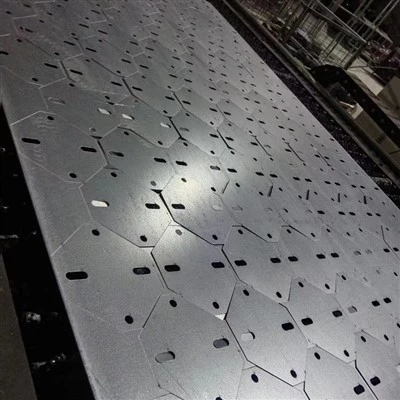
When required, blanking is the first step of the stamping process. Blanking is the process of cutting larger sheet or coils of metal into smaller, more manageable pieces. Blanking is usually performed when a stamped metal piece will be drawn or formed.
Piercing
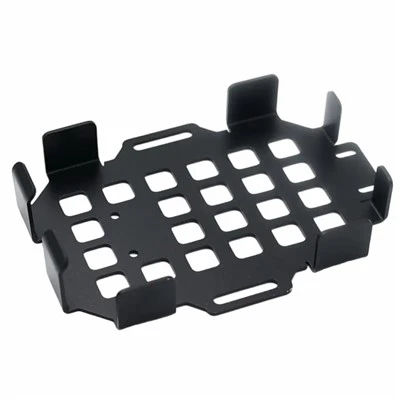
If a part requires slots, holes, or other cutouts, piercing can be employed. Piercing, which can be performed simultaneously with blanking, punches the requisite shapes out of the metal sheet.
Drawing
Drawing is the actual stamping in the metal stamping process. A punch forces a section of metal through a die, providing the primary shape of the part. When the depth of the part is less than the primary opening, it is considered shallow drawing; parts with a depth greater than the opening are deep drawn.
Bending
Bending is a fairly self-explanatory process. The part-in-progress is placed on a specially designed die and a ram pushes against the metal, providing the required bend. Bending is performed after drawing, as attempting to punch an already bent piece of metal causes the entire part to deform.
Air Bending
Air bending is when the flat surface of a part is bent by a punch into a die, often V-shaped. The space between the punch and die is larger than the metal thickness, resulting in a bend that relaxes slightly when the part is released. Air bending uses less power and pressure than other bending methods.
Bottoming and Coining
Bottoming and coining are bending processes are similar to air bending, but use anywhere from two to 30 times the pressure and the material is forced fully into a tight-fitting die, resulting in a more permanent bend.
How to Maintain Precision in High-Volume OEM Metal Stamping?
Minimizing Original Errors
An example of minimizing original errors in metal stamping could be the use of precise molds and equipment to ensure consistency in the dimensions and shape of each part. For instance, the use of high-precision CNC machine tools and precision measuring tools can minimize errors during the manufacturing process.
Equalizing Original Errors
In metal stamping, an example of equalizing original errors could be the use of appropriate materials and process parameters to ensure product quality. For example, selecting the right metal material, controlling the stamping speed and pressure, and using the proper lubricant can help balance various factors in the stamping process, thereby improving product quality and consistency.
Transferring Original Errors
In metal stamping, an example of transferring original errors could be considering the elasticity and plastic deformation of the material when designing and manufacturing molds. For instance, the design of the mold needs to take into account the possible elastic and plastic deformation of the metal material during the stamping process, so as to make appropriate adjustments in the shape and size of the mold, thereby offsetting these deformations and ensuring the accuracy of the dimensions and shape of the final product.
Compensating Original Errors
In metal stamping, an example of compensating original errors could be the use of various detection and adjustment equipment to monitor and adjust the stamping process. For example, the use of various sensors to monitor parameters such as pressure, temperature, and speed during the stamping process, and then adjusting the equipment settings based on these parameters to compensate for potential errors.
Our Factory


FAQ
Hot Tags: oem metal stamping, China oem metal stamping manufacturers, suppliers, factory, PVC Cable Tray, Galvanized Carport Brackets, Galvanized Brackets Stainless Steel C Channel, Ground Foundation Screws, Waterproof Solar Carport, Helix Ground Screws


Send Inquiry
