

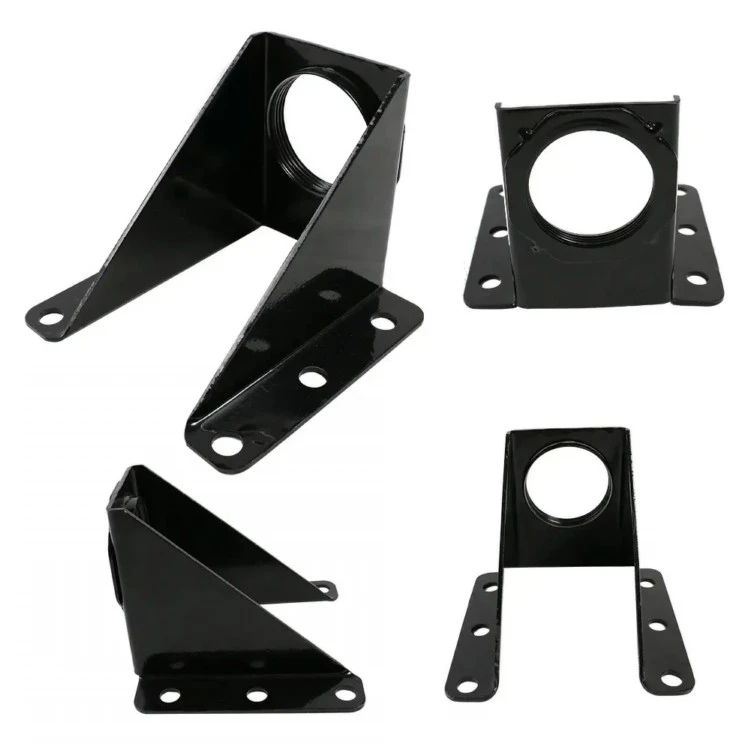


Stamped Metal Brackets
Place of Origin:Fujian , China
Model Number: Custom Made
Finish: polishing
Material: Aluminum, Steel, Stainless Steel, SPCC, SGCC, etc
Service: Custom Fabrication Services
Product name: stamped metal brackets
Application: Used Widely
Certificate: ISO9001:2015/IATF6949/ROHS/SMETA/ISO 14001
Process: Laser Cutting, Tooling Stamping, etc.
Lead Time: 10-20 working days
Payment:TT 100% or 30% deposit, the balance before shipment
What is a Stamped Metal Bracket
A stamped metal bracket is a metal component manufactured through the stamping process, utilizing dies and presses to form and cut metal sheets into the required shapes and sizes. This technique precisely controls material deformation, ensuring consistent quality and dimensional accuracy for each bracket. Widely used in construction, machinery, electronics, and other fields, stamped metal brackets are ideal for connecting and supporting various structures due to their high strength, corrosion resistance, and excellent load-bearing capacity.
Advantages of Stamped Metal Brackets
High-precision manufacturing
Stamped metal brackets are produced using precise molds and advanced stamping equipment, ensuring consistent size and shape for every product. This high-precision manufacturing improves product interchangeability, reduces installation errors, and enhances overall construction efficiency.
Superior material strength
The stamping process strengthens the mechanical properties of metal materials, resulting in brackets with higher strength and hardness. Compared to ordinary welded or cast brackets, stamped metal brackets excel in load-bearing capacity and resistance to deformation, suitable for various high-load applications.
Corrosion resistance
Many stamped metal brackets are made from stainless steel or other specially treated materials, offering excellent corrosion resistance. This allows them to be used under harsh environmental conditions for extended periods without rusting or corroding, prolonging product lifespan.
Cost-effective
The stamping process is an efficient, low-cost manufacturing method that can mass-produce high-quality metal brackets. Compared to traditional manual production or complex machining processes, stamped metal brackets have a clear cost advantage, saving significant production costs for businesses.
Design flexibility
The stamping process enables designers to freely create bracket shapes and sizes according to specific needs, meeting different application requirements. Whether simple straight brackets or complex irregular brackets, they can be easily achieved by adjusting molds and process parameters, enhancing product design flexibility.
Environmental protection and energy saving
The manufacturing process of stamped metal brackets is relatively environmentally friendly, reducing waste generation and energy consumption. Additionally, due to their long lifespan and recyclability, stamped metal brackets have a minimal environmental impact during use, aligning with modern green building and sustainable development concepts.
Application Scenario
Automotive Industry
Stamped metal brackets are widely used in the automotive industry to hold various parts in place.
Electronics
The electronics industry also relies heavily on stamped metal brackets to hold electronic components and circuit boards in place.
Construction
Construction companies use stamped metal brackets for a variety of applications, including holding beams, joists, and other building materials in place.
HVAC Systems
HVAC systems rely on stamped metal brackets to hold ductwork, air handlers, and other components in place.
Medical Devices
The medical industry uses stamped metal brackets to hold a variety of medical devices in place, such as IV pumps, monitors, and oxygen tanks.
Installation Guide for Stamped Metal Brackets
Preparation
Ensure you have all necessary tools and materials ready, including stamped metal brackets, screws, nuts, wrenches, etc. Also, check the surface of the brackets for any damage or deformation to ensure they are intact.
Determine Installation Position
Determine the installation position of the stamped metal brackets based on engineering drawings or actual needs. Ensure the selected location can withstand the expected load and is convenient for subsequent maintenance and repair.
Mark Installation Holes
Use a marker to mark the holes for the stamped metal brackets at the installation site. Make sure the markings are accurate to avoid affecting the installation effect.
Drill Holes and Fix Anchors (If Needed)
If the installation site is concrete or brick walls, it is recommended to drill holes with an electric drill and then insert anchors. This helps improve the stability and load-bearing capacity of the brackets. Be careful to keep the drilling vertical to avoid inclination.
Install Bracket Body
Align the stamped metal bracket with the marked holes and fix it with screws and nuts. When tightening the screws, maintain moderate force to avoid overtightening causing thread slippage or loosening causing bracket instability.
Adjustment and Calibration
After installation, adjust and calibrate the stamped metal brackets to ensure they are level, vertical, and stable to meet engineering requirements. If necessary, use a level or other measuring tools for assistance.
Safety Check
Finally, conduct a comprehensive safety check. Inspect whether the brackets are secure and reliable, and check for any looseness or inclination. Also, confirm that no steps or details were missed during the installation process.

FAQs
1: What is stamped metal bracket?
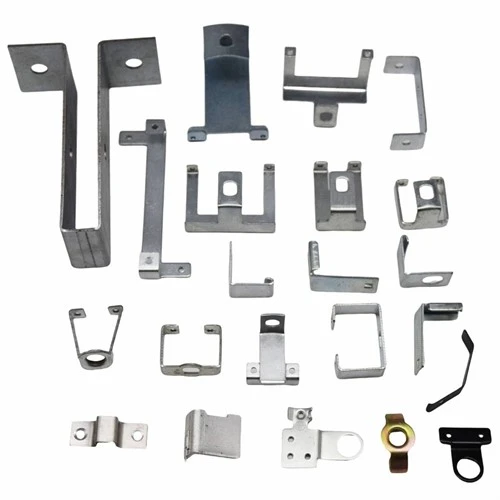
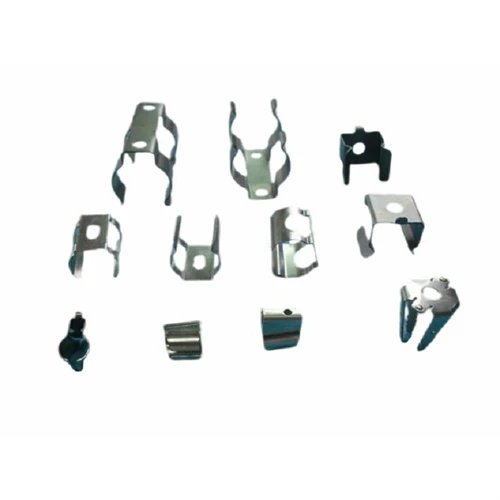
Stamped metal brackets refer to components that are produced by stamping a sheet of metal into a specific form and shape. They are commonly used in various applications such as electrical, automotive, construction, and more for their high strength-to-weight ratio, cost-effective production, and ease of customization.
2: What types of metal are commonly used for stamped metal brackets?
Stainless steel, aluminum, brass, and copper are some of the most common metals used in stamped metal bracket production due to their excellent corrosion resistance, lightweight, and durability. The specific metal used depends on the application's requirements, such as strength, conductivity, and environmental conditions.
3: What is the production process for stamped metal brackets?
Stamping is a metal-forming process that involves punching, cutting, and bending a sheet of metal to create the desired shape. First, a die is used to create the desired shape in one or more stages. The sheet metal is then fed through the press, and the die creates the shape by piercing and cutting the metal in a specific pattern.
4: What is the cost of producing stamped metal brackets?
The cost of producing stamped metal brackets varies based on several factors, such as the complexity of the design, the size, the material, and the quantity required. However, stamped metal brackets are generally cost-effective compared to other manufacturing methods, especially for large quantities.
5: How durable are stamped metal brackets?
Stamping produces stamped metal brackets with high durability, which can withstand extreme conditions without deformation or failure. The specific durability depends on the material and the design of the stamped metal bracket.
6: What industries are stamped metal brackets commonly used in?
Brackets, also known as hangers, play a pivotal role in a variety of applications, from buildings and automotive vehicles to electronics and appliances.
7: Can stamped metal brackets be customized for specific applications?
Our product offerings include custom metal brackets, which are manufactured in adherence to even the most stringent application requirements. Our custom metal bracket capabilities include various design options, materials, finishes, and more to meet the needs of several applications.
8: What surface treatments are available for stamped metal brackets to enhance corrosion resistance?
Anodizing: Anodizing is an electrochemical treatment that places a protective oxide layer on the surface of a metal bracket. They offer durability and corrosion protection. Chrome Plating: Chrome plating is an exceptionally durable protective layer that offers a decorative finish with corrosion protection.
9: Are there any weight limits or load specifications for stamped metal brackets?
Load capacity refers to the maximum weight a metal bracket can safely support without failing. This capacity is influenced by the bracket's design, size, structure, and material. Popular metal brackets made from steel, stainless steel, and aluminum can support up to 500 lbs.
10: What are the advantages of using stainless steel for stamped metal brackets?
Stainless steel is one of the most popular metal stamping materials because of its visual appeal, corrosion resistance, and durability. These benefits make stainless steel ideal for an array of industries, including construction, automotive, electronics, and much more.
Hot Tags: stamped metal brackets, China stamped metal brackets manufacturers, suppliers, factory, Seismic Brackets, Seismic Cable Bracing, Stainless Mounting Brackets, Invisible Wall Brackets, Metal Brackets, Metal Angle Supports


Send Inquiry
