


Ground Foundation Screws
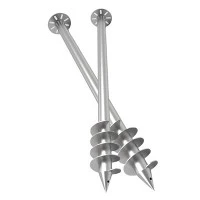
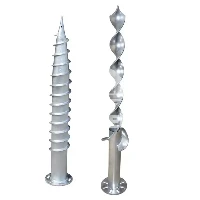
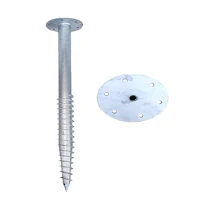
A screw pile is a steel tube with a helical head that screws into the ground. It is used as a method of foundation in a wide range of construction situations.
Xiamen Jinghe Natural New Materials Co., Ltd has focused on top-quality hardware products like stainless steel products, metal products, galvanized products, customized by sample or drawing, etc. all over 20 years in China. We started as a small operation, but now have become one of the leading suppliers in the metal products industry in China.
Why Choose Us?
Wide Product Range
Today, we have varied products such as ground screws, brackets, Solar Carport products, bridges, C channel steels, manufacturing metal products, and also for buyers customized any metal products.
Quality Assurance
The quality of our products is undoubtedly guaranteed. They meet the highest quality requirements as stipulated in ISO9001, ISO14000:14001 SGS guidelines, and our stringent quality control system
Wide Range of Applications
Our products are applicable to many situations, for example, solar energy foundations, wooden chalets, integrated houses, container houses, tent hotels, light steel structures, wooden walkways, water trestles, Pillar foundations, handrails/fences, tower foundations, recreational facilities, etc.
Broad Market
We have customers from both the domestic market and the overseas market. Our main sales market is North America as well as Southern Europe, which respectively take up 25.00% and 15.00%.
Introduction of Steel Screw Piles
A screw pile is a steel tube with a helical head that screws into the ground. It is used as a method of foundation in a wide range of construction situations. You can use DIY screw piles for making quick, easy, and strong bases for sheds, garden houses, log cabins, garages, fences, and decks.

Ground screws are an innovative foundation solution that bypasses the need for traditional foundations like concrete and offer the perfect solution for projects on sloping, uneven ground or in hard-to-access areas.

HELIX-Screw Pile is a groundbreaking foundation method for DIY-builders. With HELIX-Screw Piles you can make the foundations for your decking, fence, garage, dock, etc. fast and effortlessly. These high-quality skew piles have a superior load capacity and they are made in Finland By the highest quality standards.

Ground screws work in a similar way to a concrete foundation, but they have a much quicker installation process. The ground is pre-drilled before the screw is applied. This makes the screws easier to attach, and will also move or break down any small to medium-sized rocks in the way.

Ground screws are an innovative foundation solution that bypasses the need for traditional foundations like concrete and offer the perfect solution for projects on sloping, uneven ground or in hard-to-access areas.

Ground Screw Foundation For House
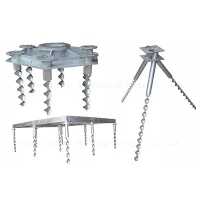
Ground screws otherwise known as grounding foundation screws are an easy and green alternative to concrete foundations. As a system, you can combine screws at varying lengths and different screw head attachments to suit the application above ground.

A screw pile is a steel tube with a helical head that screws into the ground. It is used as a method of foundation in a wide range of construction situations. You can use DIY screw piles for making quick, easy, and strong bases for sheds, garden houses, log cabins, garages, fences, and decks.

The solar roof hook is an essential component of a rooftop solar panel installation. They provide a secure attachment point for mounting the solar panels to the roof. The spacing of these roof hooks plays a crucial role in ensuring the stability and integrity of the solar array.

Metal angle supports, also known simply as angle brackets or corner braces, are structural components used to provide additional support and stability to various structures, joints, and connections. They are typically made from metal such as steel, stainless steel, or aluminum, and are available in a variety of shapes, sizes, and configurations to suit different applications.

Rack mounting systems are the most common type of solar panel stand and consist of a metal frame that attaches to your roof. Pole mounting systems stand on a pole or a post, while adjustable mounting systems allow you to adjust the angle of the solar panel.
Benefits of Steel Screw Piles
Rapid Installation
Screw piles are usually installed using conventional construction equipment such as a track excavator or a mini-excavator equipped with an appropriately sized low-speed high torque hydraulic motor. There is no need to mobilize special equipment, such as a crane with a pile hammer or a large drilled shaft rig. This makes for fast and inexpensive mobilization; Contractors can respond and be on site quickly. Typically only an operator and one laborer are needed. Large load capacities can be obtained using relatively small installation equipment.
Immediate Load Carrying Capability
Screw piles are unique among most other types of foundations or anchoring systems in that they can be loaded immediately after installation. There is no need to wait for concrete or grout to harden, or in the case of driven piles, no need to wait for excess pore water pressures to dissipate. This can be important in some projects, for example, emergency response where the construction schedule is short and the rest of the project depends on installation of the foundations or anchors.
Minimal Site Disturbance
Relative to most other types of construction activity involving the installation of driven piles, drilled shafts, or other anchoring systems, the installation of screw- piles produce little to no disturbance of the site. Specifically, the installation of screw-piles and helical anchors typically produces no soil cuttings. This keeps the site clean, requires minimal cleanup at each installation locations after installation, and usually means lower project costs. An additional advantage is the low noise level associated with installation. Installation also produces minimal vibrations which can be important on some projects that are sensitive to construction vibrations. Since screw-piles and helical anchors have a small work footprint they also produce minimal disruption to adjacent structures.
Simple Field Modifications to Increase Load Capacity
One of the other unique features of screw-piles that makes them highly versatile is the ability to quickly modify the configuration of the helical elements to increase load capacity. This is achieved in part by the modular nature of the technology. Adding extension sections with additional helical plates and/or helical plates of larger diameter is easy and means that the engineer can quickly develop a solution without requiring the fabrication of an entirely new foundation or anchor.
Wide Range of Soil and Load Applications
Screw-piles can be installed in a wide range of subsurface conditions, from very soft to very stiff clays, from loose to very dense sands. Design loads have a very wide range depending on the needs of the project and can be as high as 650 kips!
Low Carbon Footprint – Sustainable Technology
Many manufacturers of screw-piles use high quality recycled steel to in their fabrication. This conserves natural resources and energy and reduces the overall carbon footprint. Screw-piles and helical anchors are especially useful for support of temporary structures since they can be removed and reused with little to no change in structural integrity.
Applications of Steel Screw Piling
Residential Projects
Screw piling is commonly used in residential construction for single-family homes, multi-story buildings, and townhouse developments. It provides a reliable foundation solution, especially in areas with challenging soil conditions. Screw piles can effectively support the weight of residential structures and ensure long-term stability.
Commercial and Industrial Buildings
Screw piling is highly suitable for commercial and industrial projects such as office buildings, warehouses, factories, and shopping centers. These structures often require deep foundations to support heavy loads and withstand various environmental conditions. Screw piles offer excellent load-bearing capacity and can be installed quickly, making them a preferred choice for time-sensitive projects.
Infrastructure Developments
Screw piling is widely used in infrastructure projects, including bridges, boardwalks, wharves, and retaining walls. These structures often require foundations that can withstand dynamic loads, ground movement, and environmental factors. Screw piles provide the necessary stability and resistance to support such infrastructure developments.
Mining and Resource Industry
Screw piling is utilized in mining and resource projects, where stability and load-bearing capacity are crucial. It is employed for structures like conveyor systems, processing plants, and equipment foundations. Screw piles offer efficient foundation solutions in remote or challenging environments where traditional foundation methods may be impractical.
Suitable In All Soil Conditions
Our range of screws is suitable in all soil conditions, perfect for difficult terrain and sloping land, and can quickly level up the ground to give your structure the stability it requires.
No Curing Time
No concrete is needed so no curing time, and you can start building immediately after installation. With screw piling, heavy loads can be supported, and required depths reached by adding more extensions.
Low Environmental Footprint
Our helical screw foundations have less embodied carbon than an equivalent concrete base, and are removable and reusable with a low environmental footprint. This added to the installation process makes them a better option and more sustainable.
Installation On Time
No matter the weather, frozen ground, or challenging soil conditions, helical piles can be installed all year round. Say goodbye to costly delays, as screw piling will help you hit your deadlines and budgets.
The Screw Piling Process
Site Investigation and Soil Analysis: Before commencing the screw piling process, a thorough site investigation is conducted. This includes soil analysis to assess the soil composition, bearing capacity, and any potential challenges. Soil tests and geotechnical reports provide critical information for designing the appropriate screw pile configuration and determining the installation depth.
Design and Engineering: Based on the site investigation results, engineers design the screw piles to meet the specific load requirements of the project. Factors such as the structure's weight, expected loads, and soil conditions are considered during the design phase.
Installation Preparation: Once the screw pile design is finalized, the site is prepared for installation. This involves marking out the pile locations and ensuring proper access to machinery and equipment. Any necessary clearance or excavation is carried out to create space for the screw pile installation.
Screw Pile Installation: Specialized machinery, such as hydraulic or torque motors, is used to install the screw piles. The piles are screwed into the ground, rotating them downward with a controlled amount of torque. This process creates minimal vibration and disturbance to the surrounding environment.
Quality Control and Monitoring: Throughout the installation process, quality control measures are implemented to ensure proper pile alignment and depth. Torque readings and installation logs are recorded to verify the pile's load-bearing capacity and the achievement of design specifications.
Selecting the Right Screw Pile Foundation
Soil Conditions
The type of soil at your project site plays a significant role in determining the ideal screw pile foundation. Some screw piles are designed for sandy soils, while others work better in clay or rocky terrains. Make sure to assess the soil conditions at your site and select a screw pile foundation that's suitable.
Load-Bearing Requirements
Consider the weight and load-bearing capacity your project demands. Screw pile foundations come in various sizes and load-bearing capacities, so be sure to choose one that matches the structural requirements of your project.
Environmental Considerations
If your project is in an environmentally sensitive area, you'll want to choose screw pile foundations that have minimal impact on the ecosystem. Look for eco-friendly options that won't disrupt local flora and fauna.
Expert Consultation
When in doubt, seek expert advice. Consulting with a structural engineer or a professional experienced in screw pile foundations can help you make the right choice. They can assess your project's specific needs and provide recommendations based on their expertise.
Budget and Cost
While screw pile foundations are generally cost-effective, it's essential to consider your project's budget. Compare the costs of different screw pile options, including installation and any additional work required, to ensure it fits within your financial constraints.
Our Factory


FAQ
Hot Tags: ground foundation screws, China ground foundation screws manufacturers, suppliers, factory, Steel Screw Piles Price, Galvanized Carport Brackets, T Frame Carbon Steel Solar Mounting Carport, Carbon Steel Solar Carport, Galvanized Steel Angle Brackets, Ground Screw Anchor Footings


Send Inquiry
